where Africa comes to you..
Kenya Regions and Towns
Parent page
On this page
Nairobi lies at an altitude of 5,500 ft above sea level and has no real variations in the climate. Average temperatures range from 21°C in January to 16°C in July.
What once was a remote railway outpost has become the largest city between Johannesburg and Cairo and is Kenya's capital city and the world's safari capital. It has long been the commercial centre of Eastern Africa and one of the world's cross-roads with its' international airport servicing most of the world's airlines. Nairobi has a population of over 2 million people with all the main religious demoninations being represented.
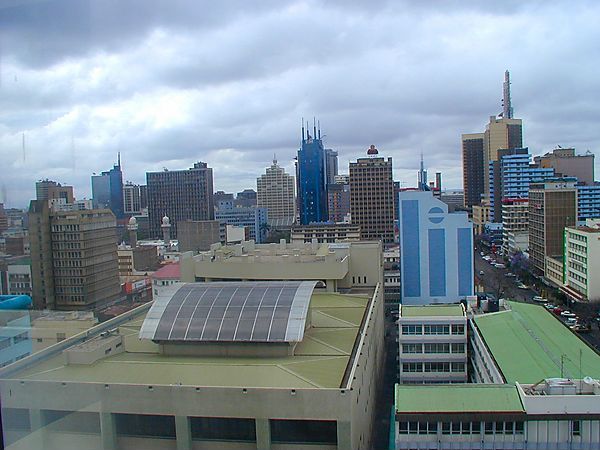
Nairobi came into existence with the building of the Kenya-Uganda Railway in 1899 and it has grown into a very modern, cosmopolitan, lively, interesting and pleasantly landscaped city. You'll meet travellers from all over the world here. If you've travelled through Africa from the West you will be refreshed with the ease of getting bureaucratic matters sorted out, good bookshops, restaurants, efficient banks, efficient telecommunications systems, a place where you can get things done with the minimum amount of fuss in a timely fashion. However, the downside is the security , in recent years there has been an increase in robberies and muggings, you just have be extra cautious.
Some of the places to visit whilst in Nairobi include; the National Theatre, Phoenix Theatre, McMillan Memorial Library, Kenyatta International Conference Centre, Parliament Buildings, Nairobi National Park, the Snake Park, National Museum, Bomas of Kenya (for traditional dancing and tribal villages,), Nairobi Races (hose racing on Sundays), and the National International Show (August/September/October). Nairobi also have several modern cinemas in the city centre and two drive-in cinemas.
The City Market on Muindi Mbingu Street is worth a visit if you are shopping for curios. Depending on how good your bartering is, you can get a bargain be it soapstone carvings wood carvings or other handicrafts .Don't be put off by the stall holders who can be a bit overbearing.
Read our article Places to visit and things to do in Nairobi in a day
The Kenyan Coastline has a history dating back over 1,000 years and is home to the Miki Kenda civilisation, of which there are nine tribes who inhabit the area. Along the palm fringed coastline lies a spectacular coral reef running, almost uninterrupted, for a stretch of almost 480 kilometres. The area is teeming with marine life, lagoons and creeks and numerous species of birdlife who live in the mangrove forests or on overhanging cliffs. The coastline is one of the most popular tourist destinations in Africa, with many tourist class hotels offering a full range of activities.
Mombasa
Mombasa is Kenya's oldest town with its origins dating back as far as 500BC and up until recent times has been Africa's trading centre with Asia. The town has a large population of Asians and the whole region is strongly Islamic.
Mombasa has the oldest fort in Africa, Fort Jesus, built by Portugese explorers in the 16th century.The fort is now a national museum and houses well preserved artefacts and relics, some dating back 300 years.
Nowadays Mombasa's main attraction is the tourist industry, with more and more hotels being built along the coastline, this is often the first port of call onward to a nearby seaside retreat. Sightseeing within the town can be done within a day and the main attractions are Fort Jesus, the old town with fine Arab style buildings, Mandhry mosque and the municipal market.
Malindi
Malindi is one of the oldest towns in Eastern Africa, mentioned in the 12th century by an Arab trader. Chinese porcelain has been found dating back to the 9th century, brought in ships from the Persian Gulf, Arabia and India, returning with ivory, mangrove poles, leopard skins and slaves.
In 1417 Malindi was visited by a Chinese fleet and they took a Giraffe to the Chinese Emperor. Vasco da Gama. the Portuguese explorer, visited Malindi in 1498 and was welcomed by the friendly King , who supplied his ships with fresh fruits, water and most important a pilot/navigator.
Malindi was at that time a wealthy town, with multi-storied buildings, surrounded by walls. In the 16th Century Malindi's prosperity declined due to the fact that Mombasa had better harbor and facilities. The English farmers rediscovered Malindi for its relaxed ambiance, beautiful beaches and water sport like deep-sea fishing and goggling.
Tourism in Kenya started in Malindi, as Europeans were looking for safari and beach holidays, in 1960 mass tourism started by charters landing in Mombasa and put Malindi on the world map. In 1980 the Italians found Malindi the "IN" place for building their private homes, followed by hotels and restaurants.
Malindi town has not changed much since the last hundred years, old houses, small shops, beautiful beach and friendly people. The local residents Arabs, Giriama's and Swahilis are used to visitors and love to mix with them in their own unhurried pace.
Malindi is the place for kite surfing, diving, goggling, deep-sea fishing and many other water sports. Also a perfect start for your Safari to Tsavo National Park or Masai Mara Game Reserve.
Lamu Island
Located off the northern coastline of Kenya, Lamu is an historical town with many old buildings, narrow streets and friendly Arab population. It has been trading center and already in the 11th Century dhows sailed along the East African coast to Arabia, Persia and India. But with the abolition of slavery in 1907 the economy of the island went into decline.
In the early 1970s, Lamu was discovered by "hippies " and they loved the laisser faire attitude of its people and ambiance. They have gone, but tourist are still coming to Lamu, it has now some good hotels, and guesthouses. In recent years, some wealthy people have restored the beautiful grand houses in authentic style and hose houses are sometimes for rent, inclusive cook, staff and all comforts. Life for the Arab/Bajuni people has not changed much, men still wear full length robes ( khanzus ) and caps ( kofia ), the ladies in bui-bui.
Lamu can be reached by small aircraft from Malindi or Mombasa, flights are fairly inexpensive. Alternatively, you can use local bus and ferry, but the road is very rough and slow. There have been problems in the past with armed bandits, jumping the buses, as they slow down for pot-holes and demanding cash and valuables from passengers.
Once there, Lamu Island is a worthwhile place to get away from it all. Tourism, although important, is small scale compared to the rest of Kenyas' coastline. There are no discos and being predominantly Islamic, very little alcohol, the food is excellant with an emphasis on seafood, and the atmosphere very laid back. The island is vehicle free with the only form of transport is donkeys. 15 minutes walk from Lamu town is a long stretch of sandy beach. The town itself has been designated a national monument and funds are being raised to restore the old coral-rag houses. The locals are reknown for their friendliness and relaxed attitude to life.
A popular activity whilst in Lamu is to take dhow trip to one of the nearby islands. Snorkelling gear can be hired and it is best to try and get a group of about 6 - 8 people together to share the costs.
The Great Africa Rift Valleys runs from North to South through the whole of Kenya. Its' narrowest point is just north of Nairobi amd the whole area contains several lakes, extinct volcanos and small game parks. The views are absolutely breathtaking particularly at the viewing points just north of Limuiru and the main Naivasha and from the top of the Mau escarpment on the Kericho road.
Lake Baringo
The most northerly of the rift valley lakes, being 1168 sq kms in size and having a maximum depth of 12mtrs. The area is one of Kenya's most popular locations for bird-watches, with over 470 species in the area being spotted; including flamingos, Goliath herons, Verreaux's eagle, great white egrets and a wide variety of hornbills. The lake is home to an abundant variety of fish, hippos, crocodiles and monitor lizards.
Lake Bogoria
Lying just south of Lake Baringo, Bogoria is a long, thin soda lake with boiling hot springs and steaming geysers set in rocky outcrops creating a magnificient scene. It is also a popular birding spot and there are plenty of flamingos, especially when Lake Nakuru's water level is low. The area is a national park, so an entry fee is charged. You may encourter the rare greater kudu, as well as cheetah, hyena, jackal and leopard in the area.
Lake Nakuru
The park entrance lies 6km from Nakuru town and the main attraction is Lake Nakuru, a shallow alkaline soda lake set beneath the high cliffs of the eastern Rift Valley. It is an ornithologists' paradise offering the spectacular view of up to 2 million flamingos at one time (during the season) along with hundreds of other species including birds of prey. An area of 190 sq km around the lake is fenced in as a national park and has been made a sanctuary for Rothschild giraffes and black rhinos.
Lake Naivasha
This is the largest freshwater lake along the Kenyan section of the Rift valley. Because it is the nearest lake to Nairobi it attracts many residents as well as tourists. Fishing here is good but it's main attraction is the bird life, best observed by taking a boat trip to the wildlife sanctuary on Crescent Island. Opposite Hippo Point, a few kms past Fisherman's Camp is Elsamere, the former home of the late Joy Adamson of the Born Free fame, the area is now a small meseum and conservation centre. The Naivasha vineyards are located on the southern shoreline.
Mount Longonot
This is the highest of the Rift volcanos at 2,886mtrs. The crater is 1km in diameter and can be seen from the main Rift viewpoint. The climb is steep but can be done in six hours from the range station and round the circumference of the rim. An admission fee is charged.
Hells Gate
Located very close to Lake Naivasha, the National Park covers a small area, but the landscape is impressive and can be explored on foot. The entrance to the gorge is marked by Fischer's Tower, a 25mtr tall volcanic pinnacle. Girafffe, hartebeast, zebra, Thomson's gazelle, buffalo, eland and impala can be seen grazing on the grasslands.
The Aberdares
The peak of the Aberdares, Ol-Doinyo Lesatima, at 3,999mtrs is the third highest in Kenya and the mountain range for the steep eastern edge of the Rift Valley.The area contains one of the country's largest protected forest area and is rich in wildlife although catching sight of the animals is difficult because of the dense vegetation. Many of the game lodges provide purpose built viewing platforms. There is no cheap accommodation in the park (apart from a couple of basic campsites) and without your own transport is is difficult to get to. Walking is not permitted in the area.
Mount Kenya
Africa's second highest mountain at 5,199mtrs, it is an extinct volcano lying on the equator. It's snow capped peaks, Batain and Nelion are in view for miles around on the clear day. These peaks are regularly scaled by experience climbers, though few make it to the ery top. Lenana, the third peak, is the most popular for climbing as it is relatively easy. The scenery is stunning and quite breathtaking. It is also a botanist's paradise, with a wide variation in flora as the altitude changes.